The 'Home Office is a Distraction Trap' Myth: What Users Really Say
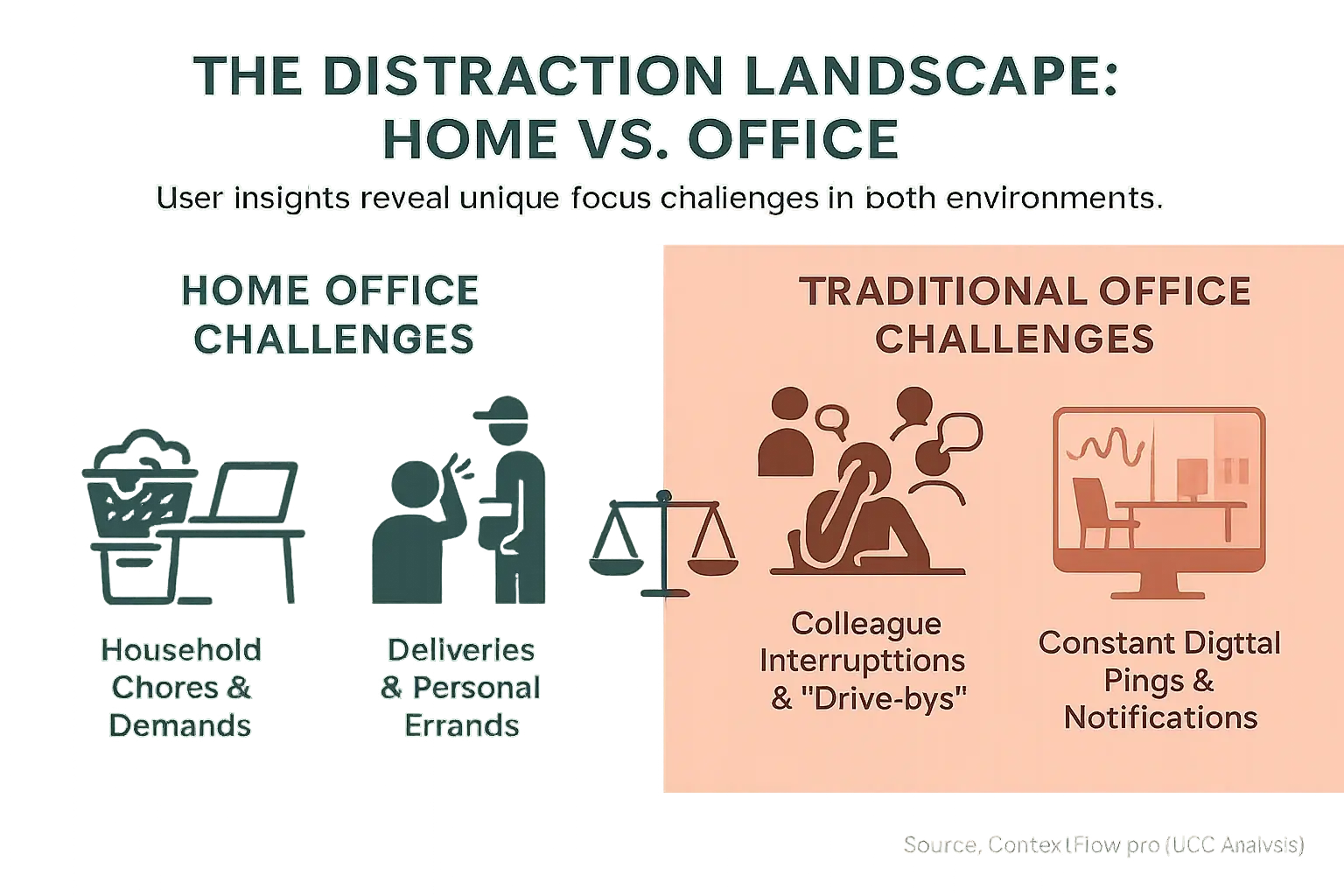
Ever heard someone say, "Oh, I just can't focus at home, too many distractions!"? It is a common refrain. Our deep dive into user experiences tells a more nuanced story. Home distractions are certainly real. The narrative, however, is often oversimplified. The 'always' part of that statement? That is the myth ContextFlow.pro finds consistently challenged by user reports.
Here is an unspoken truth. Many traditional office environments present their own significant, often disruptive, focus challenges. Many users confess they thought the office would be their focus sanctuary. They instead discovered a different kind of chaos. Imagine constant desk drive-bys from colleagues. Picture relentless meeting pings. Consider the sheer auditory assault of a typical open-plan office. User-generated content reveals both home and office settings possess unique distraction profiles; the critical insight is understanding which specific distractions impact your ability to concentrate most severely.
The genuine determinant of focus is not merely where you work. It hinges more on how you structure your work and what specific environmental factors derail your concentration. Professionals across industries report developing specific strategies. They learn to manage distractions effectively. This adaptation occurs in both home and corporate office settings. The challenge is not location, but context management.
Surprise! Your 'Quiet' Office Can Be a Focus Killer Too (User Confessions)
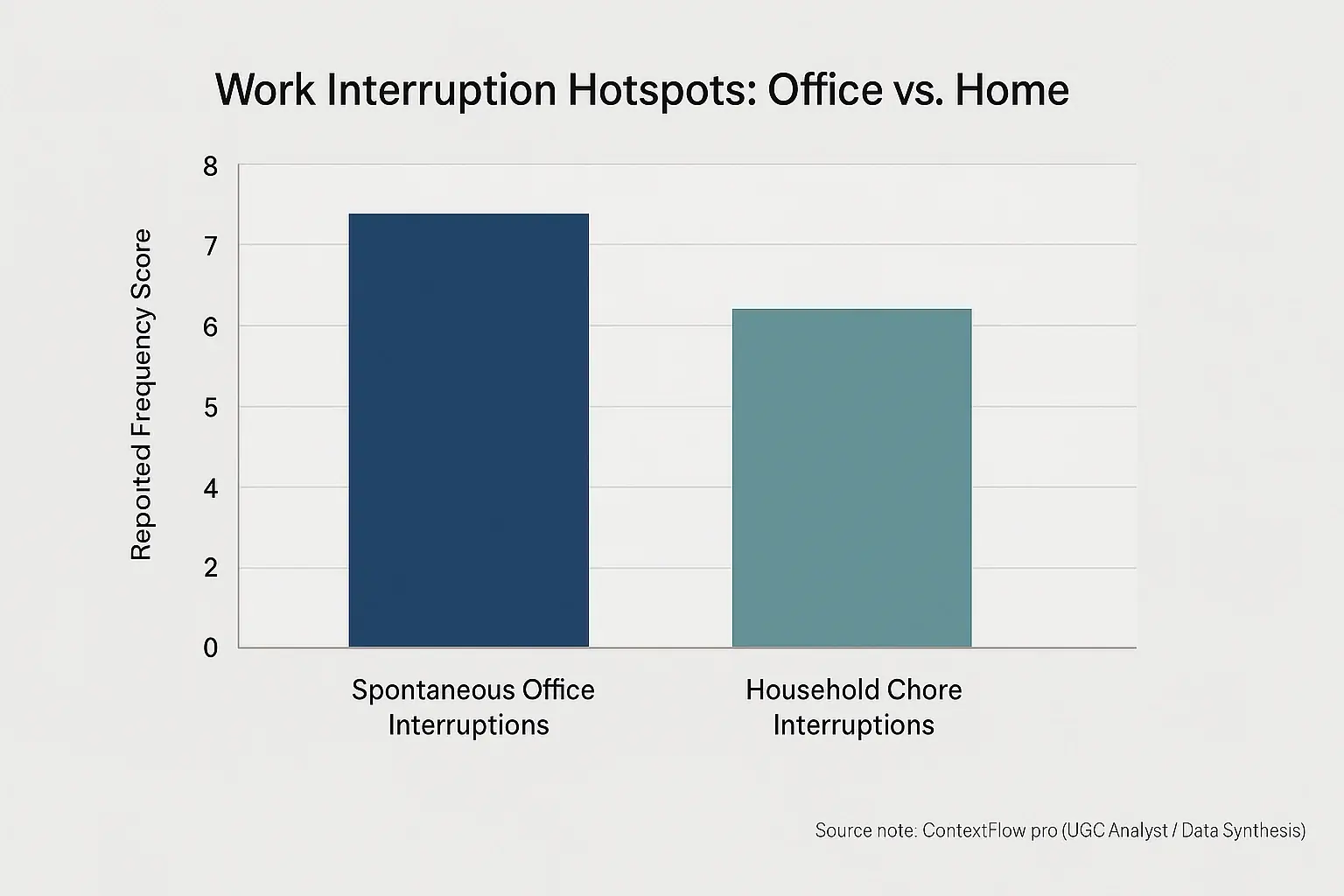
Think the office is a haven of uninterrupted focus? Many users beg to differ. They report the "spontaneous desk drive-by" is a constant menace. That quick "got a minute?" derails an hour of deep work. These seemingly minor interruptions accumulate, shattering concentration for countless professionals.
Open-plan offices often turn into a cacophony. Conversations, phone calls, and keyboard clatter fill the space. Users describe a constant background hum. This makes concentration a Herculean task. Many resort to noise-cancelling headphones just to think. And here's a twist. Digital distractions, like Slack pings and email alerts, do not magically disappear in the office. In fact, user reports indicate the pressure to respond quickly feels even more intense when colleagues are physically nearby, a frequently overlooked reality.
Then there is the meeting marathon. Users often find their office days are chopped into tiny, unproductive segments. Back-to-back meetings leave zero room for actual focused work. It is a common complaint found in user confessions. "My entire office day was just meetings and trying to catch up in between," one professional lamented, echoing a widespread sentiment.
Your Home, Your Focus Sanctuary: User-Tested Strategies to Tame Distractions

Your home office does not have to be a distraction minefield. Thousands of users have cracked the code to turning their personal space into a focus sanctuary. Intentional environmental design is a common theme in their success stories. Establishing firm routines also proves critical for sustained concentration at home.
Many users swear by creating a dedicated workspace. Even a simple corner of a room can suffice. This physical separation signals to your brain: 'It is work time.' Equally crucial is setting digital boundaries. Professionals silence non-work notifications. They use 'Do Not Disturb' modes religiously. A surprising number of users also find dressing as if going to the office helps. This small ritual mentally shifts focus. It reduces the pull of home distractions.
Managing household distractions means clear communication with family members about 'focus times'. This is a common strategy users report. For solo workers, the challenge often involves resisting the siren call of household chores during work hours. User experiences emphasize that self-discipline is absolutely key here. Treat your home office like a real office. Some try setting specific work blocks. Others use apps to limit distracting websites. These small actions build powerful focus.
Why 'One Size Fits All' Fails: Finding Your Unique Focus Sweet Spot
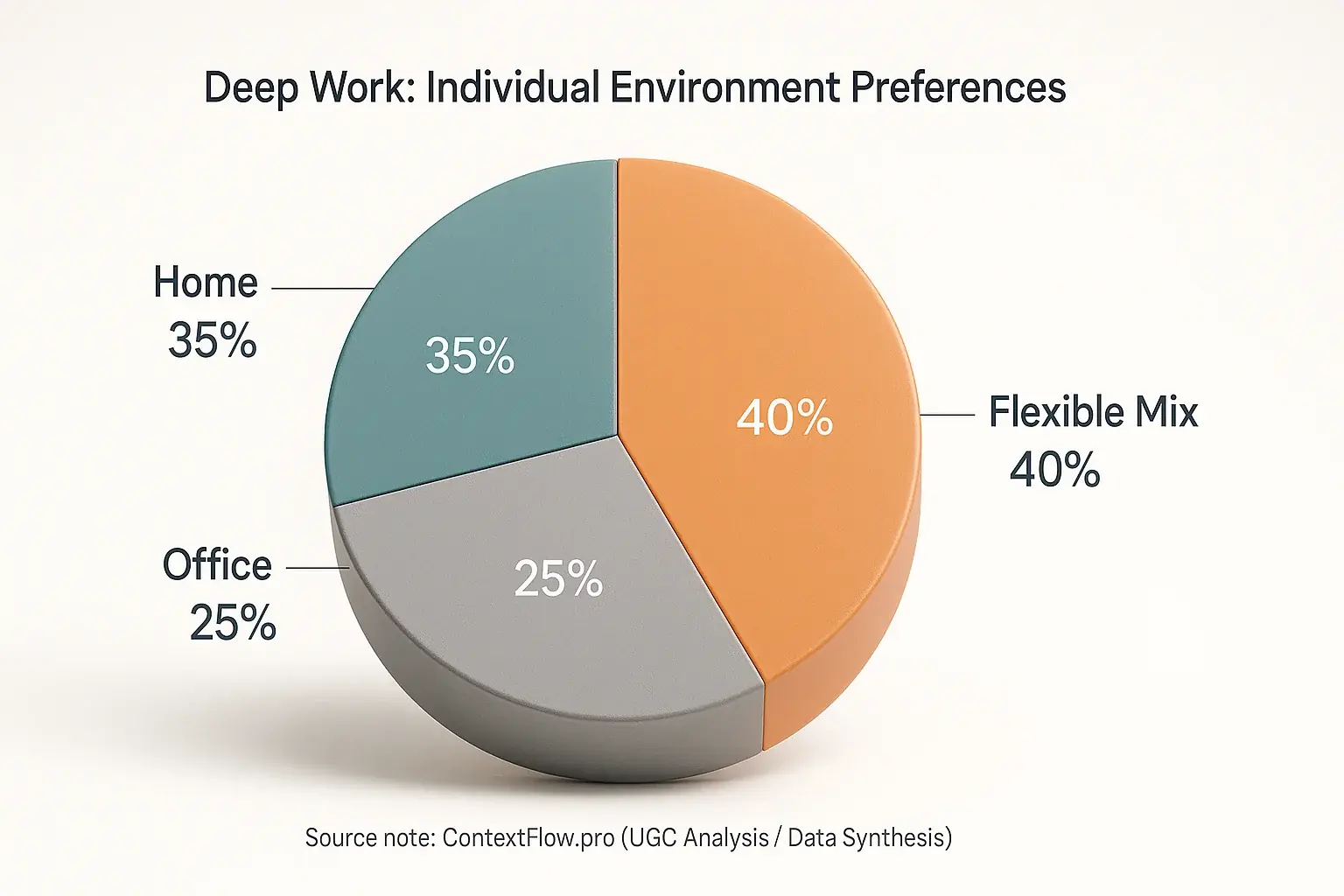
There's no universal 'best' place to focus. What works wonders for one person might be a nightmare for another. Our analysis of user experiences consistently shows individual differences in work style, task type, and personality are paramount. These factors determine where focus thrives, rendering rigid policies ineffective.
Users often find deep, concentrated work like coding or writing flourishes in a quiet home setting, while collaborative brainstorming benefits from office interactions. Matching the task to the environment is key; forcing a fit rarely succeeds. Crucially, many users report their energy levels throughout the day dictate their optimal environment. A morning person might crush deep work at home, then prefer the office buzz for afternoon meetings.
Understanding your own unique focus needs and preferred work rhythm is the ultimate game-changer. It's not merely choosing 'home or office'; professionals strategically leverage both to maximize personal flow. This self-awareness unlocks your most productive hybrid work style. Our interactive quiz helps illuminate this path to optimization.
Quiz: What's Your Optimal Focus Environment?
What's Your Optimal Focus Environment?
1. When you need deep, uninterrupted work time, where do you naturally gravitate?
2. What's your biggest distraction challenge?
3. How do you prefer to collaborate on complex projects?
What did your optimal focus environment quiz reveal? Understanding your unique needs is the first step, crucial for home-office heroes, office powerhouses, and hybrid harmonizers. These results provide a vital starting point for your self-discovery.
Now, put those insights into action. Experiment with your space, adjust your schedule, and communicate your focus needs to your team. Small changes often yield big results; this crafts a workspace supporting your best work, not rigid rules. For detailed strategies, explore our guide on creating a focus sanctuary.
Your optimal focus environment is dynamic; it evolves with your role or life changes. Keep experimenting, refining, and prioritizing your focus. Your productivity (and sanity!) will thank you.